Muscle Building on Indian Vegetarian Diet: The Protein Problem Solved
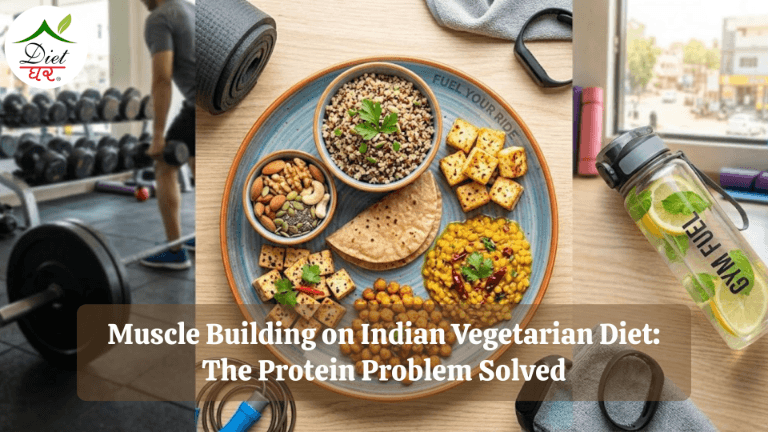
The gym floor in India often tells a story of frustration. Young men lifting consistently for months, eating "clean" by their understanding, dal, roti, curd, home food, and not seeing the muscle gains they expect. Meanwhile, advice from international fitness content recommends chicken breast, whey protein, salmon, and other foods that either do not fit their budget, dietary beliefs, or cultural context.
The fundamental truth of muscle building is that it requires two non-negotiable inputs: a training stimulus (resistance exercise) and adequate protein for muscle protein synthesis. The vegetarian Indian diet can provide both, but it requires deliberate, informed food choices rather than assuming that eating normally and working out will do the job.
How Much Protein Do You Actually Need to Build Muscle?
Current consensus from sports nutrition research: 1.6–2.2g of protein per kg of body weight per day for people actively trying to build muscle. For a 70 kg man, that is 112–154g of protein daily. For a 55 kg woman training for strength, that is 88–121g per day.
The average Indian vegetarian diet provides approximately 40–60g of protein per day. The gap is substantial, and this is the primary reason most Indian vegetarians who exercise fail to build appreciable muscle despite consistent training.
Before planning your diet, use this as your daily protein target: your body weight in kg × 1.8. A 70 kg person needs approximately 126g of protein per day. Track honestly for one week to see your current intake. Most people are shocked at how far below target they are.
The Complete Protein Problem for Vegetarians
Proteins are made of amino acids. There are 9 essential amino acids that the body cannot synthesise and must obtain from food. Animal proteins (meat, eggs, dairy) contain all 9 essential amino acids in adequate quantities, they are "complete" proteins. Most plant proteins are "incomplete", they are low in one or more essential amino acids.
Leucine is the most critical amino acid for muscle protein synthesis (MPS). It acts as a metabolic trigger for MPS, and a threshold amount (approximately 2–3g per meal) must be present to maximally stimulate muscle building. Plant protein sources generally have lower leucine concentrations than animal proteins, which is why the same weight of plant protein produces less muscle-building stimulus than the same weight of animal protein.
The solutions are:
- Eat larger quantities of plant protein (1.8–2.2g/kg rather than 1.6g/kg)
- Combine plant proteins to create complete amino acid profiles
- Include dairy protein (especially whey) which has high leucine content
The Best Indian Vegetarian Protein Sources
Dairy: The Vegetarian Muscle-Builder's Best Friend
Whey protein (from milk): Whey. The liquid portion that separates when curd is made, is nutritionally the best protein source for muscle building. It is rapidly digested, has the highest leucine content of any protein source (~11% leucine), and produces the greatest acute muscle protein synthesis response. If you consume dairy and want to optimise muscle gain, whey protein concentrate or isolate (available in Indian health supplement stores) is the single most effective dietary addition. One scoop (25–30g) post-workout provides approximately 20–25g of complete protein with high leucine.
Cottage cheese/paneer: Made from whole milk, paneer is a slow-digesting casein protein, excellent before sleep (casein provides a slow-release amino acid supply during the overnight fasting period, supporting muscle protein synthesis). 100g provides 18–20g protein. Paneer tikka, palak paneer, paneer bhurji, include daily.
Hung curd (strained dahi): Straining regular curd through muslin cloth for several hours removes excess liquid, concentrating protein to approximately 10–12g per 100g (vs. 4–5g in regular curd). This is essentially homemade Greek yoghurt. A 200g serving of hung curd provides 20–24g of protein, comparable to a standard meal's protein requirement.
Skimmed milk: Often overlooked as a protein source. One glass (250 ml) provides 8g of high-quality protein. Four glasses daily contributes 32g of protein, significant without caloric excess.
Legumes: The Indian Muscle Foundation
Soya chunks (soya granules/nutrela): The single best muscle-building plant protein in India. Dry soya chunks are 52% protein by weight. 50g (dry) rehydrated and cooked provides approximately 26g of protein, comparable to a large chicken breast. Soya protein has the highest PDCAAS (protein digestibility-corrected amino acid score) of any plant protein, equivalent to casein. Include in sabzis, curries, biryani, and pulao.
Caveat: limit to one to two servings (50g dry) per day due to phytoestrogen content. There is ongoing research on phytoestrogen effects in men, and while moderate intake appears safe, very large daily amounts are not recommended without guidance.
Tofu: Made from soy, tofu provides 8g protein per 100g with all essential amino acids. Firm tofu can be used in bhurji, tikka, stir-fries, and curries as a direct paneer substitute with higher protein per calorie.
Moong dal (whole and split): One of the most bioavailable plant proteins. Whole moong (sprouted) has good amino acid coverage and is easy to digest. 100g cooked provides 7–8g protein. Include at both lunch and dinner.
Masoor, chana, rajma: 6–9g protein per 100g cooked. Not leucine-rich individually, but in combination with dairy protein, they contribute substantially to total intake.
Seeds and Nuts
Hemp seeds: The most nutritionally complete plant protein source (all essential amino acids in good ratios). 3 tablespoons provide 10g of complete protein plus omega-3 fatty acids. Available in health food stores and online. Add to smoothies, curd, or sprinkle on meals.
Pumpkin seeds: 7g protein per 28g serving. Also high in zinc, which is critical for testosterone production and recovery.
Almonds: 6g protein per 28g serving, plus vitamin E for muscle recovery.
Timing: When to Eat Protein
For muscle building, protein timing matters more than it does for general health:
- Post-workout (within 60 minutes): 20–30g of high-quality protein to maximally stimulate muscle protein synthesis when muscles are most sensitive to amino acids. Best options: hung curd smoothie with protein powder, whey protein shake with milk, paneer and egg white combination.
- Spread throughout the day: Aim for 25–40g of protein per meal, not one large protein meal with minimal protein at others. Each protein-containing meal stimulates a separate round of muscle protein synthesis. Protein consumed at breakfast for muscle building is used just as effectively as protein consumed at dinner.
- Before bed: 30–40g of slow-digesting casein protein (paneer, thick curd, or casein protein powder) before sleep supports overnight muscle protein synthesis and recovery.
Calories: You Must Eat Enough
Muscle cannot be built in a significant caloric deficit. Your body needs extra energy to synthesise new tissue. For muscle gain ("lean bulking"), eat 200–300 calories above your maintenance requirement. For beginners, some muscle gain is possible while maintaining weight, but progress is faster with a modest surplus.
This is where many Indian vegetarians fail, they eat for health (which is calorie-conscious) but not for muscle building (which requires caloric adequacy). Ensure total caloric intake is sufficient by including energy-dense foods: paneer, nuts, seeds, whole milk, healthy oils.
Sample High-Protein Indian Vegetarian Day (125g protein target)
Breakfast (8 AM): Hung curd smoothie: 200g hung curd + banana + 1 tablespoon hemp seeds = 28g protein. OR 3 moong dal chillas + 2 eggs = 30g protein.
Post-breakfast snack (10:30 AM): One glass full-fat milk with one scoop whey protein = 30g protein.
Lunch (1 PM): Soya chunk sabzi (50g dry soya) + 2 rotis + moong dal + curd = 40g protein.
Post-workout (5 PM): Whey protein shake with skimmed milk = 25g protein.
Dinner (8 PM): Paneer bhurji (150g paneer) + 2 rotis + dal = 35g protein.
Before bed: 200g hung curd or 1 glass full-fat milk = 10–15g protein.
Total: approximately 130–140g protein
This is achievable within Indian vegetarian food culture. It requires intention and consistency, making protein the planning priority rather than an afterthought. But the ingredients are all culturally familiar and available at any Indian market. Muscle building on a vegetarian Indian diet is not a compromise. It is a well-solved problem when approached correctly.
Get Your Personalized Diet Plan Today!
This article provides general information about nutrition and diet planning. Download the DietGhar app for a customized Indian diet plan tailored to your body type, health goals, and food preferences — with daily tracking and expert support.
About the Author
Written by the DietGhar expert team — certified dietitians with 10+ years of experience helping clients achieve their health goals through personalized Indian diet plans.
Find a Dietitian Near You
Get personalized nutrition plans from certified dietitians in your city. Online consultations available across India.

