
Late Night Eating and Indian Metabolism: Why 10pm Dal-Chawal Is Different
India's Late Dinner Culture
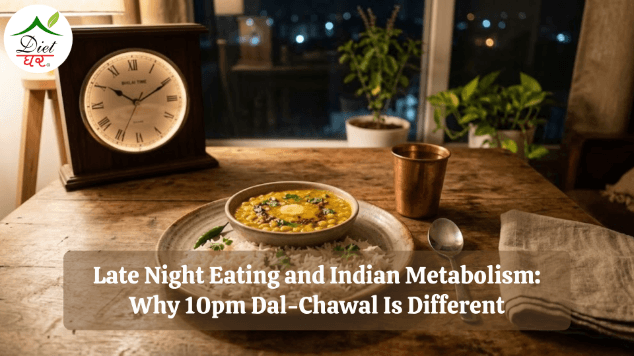
In many Indian households, particularly in urban areas, dinner is eaten between 9pm and 11pm. This is partly structural: long commutes, late office hours, and the expectation that the family eats together when everyone is home. It is also cultural: dinner is the most social and elaborate meal, and in many communities, eating before 9pm feels rushed and unsatisfying.
Late dinners are not harmful in themselves, and plenty of healthy families eat late. But research suggests the body handles the same meal a little differently at night than in the morning, and for people watching their weight or blood sugar, that can matter.
Circadian Metabolism: Why Timing Matters
Every organ in the human body operates on a circadian rhythm, a roughly 24-hour cycle orchestrated by the master clock in the brain (suprachiasmatic nucleus) and peripheral clocks in individual organs. The metabolic implications:
Insulin Sensitivity Is Highest in the Morning
In general, the body clears glucose from the blood better in the morning than in the evening. Studies that compare the same carbohydrate meal at different times of day often find a higher blood sugar response in the evening, though the size of the difference varies from person to person.
For a person eating a plate of dal-chawal, this means the same plate at 10pm may raise blood sugar more than at noon. Whether years of large late meals contribute to insulin resistance is still being studied, but it is a reasonable reason to keep late dinners moderate.
Energy Expenditure Is Lower at Night
The thermic effect of food (TEF), meaning the calories burned in digesting a meal, tends to be higher in the morning than at night. Small controlled studies have found a lower TEF for the same meal eaten late. The difference is modest, so do not expect it to explain weight gain by itself.
Fat Storage Is Prioritised at Night
Fat storage also follows a daily rhythm. Eating late does not create calories from nowhere, and total intake across the day matters most. Still, late meals are often larger, and they are followed by hours of sitting and sleeping, so the energy is less likely to be used.
What the Evidence Does and Does Not Say
Several observational studies link late eating with higher body weight and poorer blood sugar, but many of them cannot separate the timing from other habits. People who eat very late may also sleep less, snack more and move less. So timing is one useful lever, not a proven cause on its own.
If you have diabetes or take medicines for blood sugar, do not change meal timing on your own. Your doctor may need to adjust your medicines if your eating schedule changes.
The "Light Dinner" Recommendation: What It Actually Means
The common advice to "eat a light dinner" is often interpreted as eating very little, which leads to either starvation at night (which impairs sleep) or compensatory snacking. The more useful framing is: eat a dinner that is lower in carbohydrates and lower in calories than lunch, while still nutritionally complete in protein and vegetables.
A late dinner of khichdi (dal + rice) in moderate amounts is better than a large biryani. A dinner of dal soup with a small portion of millet and a sabzi is better metabolically than the same size plate of rice-dominant thali. The size of the carbohydrate portion has a big effect on how a late meal sits with you.
Practical Strategies for Urban Indian Families
The Bigger Lunch Strategy
One of the simplest changes is to make lunch the main meal and dinner smaller. Eat a full, satisfying lunch, then a lighter dinner that still has protein and vegetables but less rice or roti. It echoes the old saying about eating breakfast like a king and dinner like a pauper.
An Earlier Cut-off
Some research on time-restricted eating looks at finishing the day's food by early evening. For many urban Indian families this is not possible on weeknights because of late returns from work. Two practical approaches:
- Weekday modification: Eat a nutritious, moderate lunch as the main meal. Have a very light dinner (soup, salad, small dal, a roti) after late return. Weekend dinners can be the social, elaborate family meals.
- Stagger eating: If family dinner must be late, adults can have a small "first dinner" portion of dal and vegetable at 7pm (at the office or immediately on return) and then join the family meal for company with a much smaller portion.
What to Eat If Dinner Is Late
If dinner is unavoidably at 9-10pm:
- Reduce the carbohydrate portion, for example about half the usual rice or roti
- Increase protein and vegetable proportion
- Avoid heavy, fried, or cream-based preparations at this meal
- A bowl of khichdi (portion-controlled) is one of the better late-night Indian meals: easy to digest and filling
- If you want something warm afterwards, a cup of haldi doodh is a traditional choice, though it adds some calories
The Post-Dinner Walk
A gentle 10 to 15 minute walk after dinner is easy to do and fits Indian family life. Muscles use glucose during light activity, and small studies show a post-meal walk can lower the rise in blood sugar compared with sitting. It also helps digestion for many people. It is the old after-dinner stroll, and it is worth keeping.
Sleep and Late Eating: The Compound Effect
Late eating disrupts sleep, and disrupted sleep worsens metabolic outcomes the following day, creating a cycle. Eating a heavy meal within a couple of hours of bedtime:
- Can make it harder to fall asleep and stay asleep
- Increases acid reflux, especially after large, spicy meals
- Leaves you feeling heavy or uncomfortable when you lie down
Poor sleep is linked to higher hunger hormones and stronger cravings the next day, and many people eat more after a short night. A late dinner, poor sleep and extra hunger the next day can become a cycle.
Moving dinner a little earlier or lighter is a small change that can help sleep, digestion and appetite together. If you have a medical condition or take medicines, check with your doctor before changing meal timing. Our nutritionists at DietGhar can help fit meals around a late routine.
You might also like
Sources: Indian Food Composition Tables 2017 (ICMR-NIN); ICMR-NIN Dietary Guidelines for Indians; published research reviews on meal timing, circadian rhythm and glucose tolerance.
FAQ
Is eating dinner late really bad for weight loss?
Total food across the day matters most, but late dinners tend to be large and are followed by sleep, so many people find an earlier or lighter dinner helps. It is a useful lever, not a rule.
What is a good late-night dinner in India?
A modest bowl of khichdi, dal soup with a small portion of roti or millet and a sabzi, or eggs with vegetables are easy on the stomach. Keep rice and roti portions smaller than at lunch.
Should I walk after dinner?
A gentle 10 to 15 minute walk is a good habit for most people and may lower the blood sugar rise after a meal. If you have a heart or joint condition, ask your doctor what suits you.
How long before sleep should I eat dinner?
Many people sleep better when they finish eating two to three hours before bed. If that is not possible, keep the meal light.
Sources
- Dietary Guidelines for Indians 2024, ICMR National Institute of Nutrition (NIN), Hyderabad
- Indian Food Composition Tables (IFCT) 2017, ICMR National Institute of Nutrition (NIN), Hyderabad
- Healthy diet (fact sheet), World Health Organization
Get Your Personalized Diet Plan Today!
This article provides general information about nutrition and diet planning. Download the DietGhar app for a customized Indian diet plan tailored to your body type, health goals, and food preferences: with daily tracking and expert support.
About the Author
Written by The DietGhar Team nutritionists, helping clients since 2016 with personalised Indian diet plans. How our nutritionists work
Popular guides
Diet plans
Articles
- PCOS and PCOD diet plan, 7-day Indian meal plan
- Insulin resistance diet for Indians
- PCOS acne and skin: diet changes
- Indian keto diet for beginners
- Stress eating and cortisol
- Gluten-free Indian food for celiac disease
- Nutrition for Indians over 60
- South Indian diet for weight loss
- North Indian diet makeover
- Breastfeeding diet chart
- Winter diet and immunity foods
- Best Indian foods for hair growth
- Why crash diets fail
Find a Dietitian Near You
Get personalized nutrition plans from qualified nutritionists in your city. Online consultations available across India.

