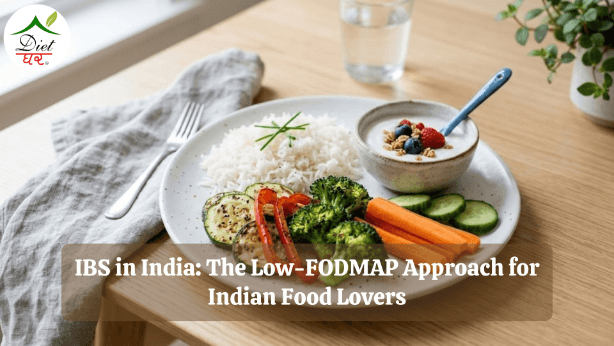
IBS in India: The Low-FODMAP Approach for Indian Food Lovers
The Stomach Problems India Never Talks About Properly
Irritable Bowel Syndrome (IBS) is one of the most common chronic conditions in India, affecting a significant number of people. Yet it remains poorly understood, underdiagnosed, and frequently dismissed with advice to "eat light," "avoid spicy food," or simply "reduce stress." While these suggestions contain partial truths, they fall short of the evidence-based management that is available.
IBS causes chronic abdominal pain, bloating, gas, and altered bowel habits (diarrhoea, constipation, or both alternating) in the absence of structural disease. It is not life-threatening, but it is profoundly disruptive, affecting work, social life, eating out, travel, and mental health.
The most evidence-based dietary intervention for IBS, studied in clinical trials, is the low-FODMAP diet. It was developed by Monash University in Australia, and many people, though not all, report fewer symptoms. Adapting it to Indian food requires knowledge and intention, but it is absolutely achievable.
What Are FODMAPs and Why Do They Cause IBS Symptoms?
FODMAP stands for Fermentable Oligosaccharides, Disaccharides, Monosaccharides, and Polyols. These are short-chain carbohydrates that are poorly absorbed in the small intestine. When they reach the colon, gut bacteria ferment them rapidly, producing gas and drawing water into the intestine. In people with IBS, who tend to have more sensitive intestinal nerves (visceral hypersensitivity), this fermentation causes pain, bloating, and altered bowel habits that would not bother people without IBS.
The categories of FODMAPs:
- Oligosaccharides (fructans and GOS): Found in wheat, onion, garlic, legumes
- Disaccharides (lactose): Found in milk, soft cheeses, ice cream
- Monosaccharides (excess fructose): Found in honey, apples, mangoes
- Polyols: Found in stone fruits (peaches, plums), artificial sweeteners (sorbitol, xylitol)
The FODMAP diet works by identifying and temporarily eliminating all high-FODMAP foods, then systematically reintroducing them to identify individual triggers. Most people with IBS are not sensitive to all FODMAPs, they have specific triggers. The reintroduction phase identifies these, allowing for the most permissive diet possible.
The Indian IBS Challenge
The low-FODMAP diet presents particular challenges for Indian food culture because many of India's most beloved and nutritious foods are high in FODMAPs:
- Onion and garlic. The foundation of most Indian cooking, and high-FODMAP (fructans)
- Wheat (atta roti, maida preparations), high in fructans
- Most legumes (dal, rajma, chole, moong), high in GOS (galacto-oligosaccharides)
- Milk and soft dairy (doodh, paneer in large amounts), lactose
- Mango, apple, and certain other fruits
This does not mean Indian IBS patients cannot follow a low-FODMAP approach. It means they need clear guidance on what IS safe in Indian cuisine and how to modify cooking to reduce FODMAP content.
Low-FODMAP Indian Foods: Your Safe Zone
Grains and Starches
- White rice, low-FODMAP and a safe staple
- Rice flour, rice noodles
- Corn, poha (beaten rice), corn flour
- Oats (certified gluten-free oats are both low-FODMAP and safe)
- Gluten-free roti made from rice flour or corn flour
- Potato, sweet potato (in moderate portions)
Vegetables (Safe at Standard Portions)
- Capsicum (bell pepper), green is lowest FODMAP
- Tomato (up to 3/4 cup)
- Spinach, methi leaves, coriander
- Karela (bitter gourd)
- Lauki (bottle gourd)
- Turai (ridge gourd)
- Bean sprouts
- Carrot, cucumber, lettuce
- Beans (green/French beans)
- Brinjal/aubergine (in moderate amounts)
Proteins
- Eggs, reliably low-FODMAP
- Chicken, fish, mutton, inherently low-FODMAP
- Firm tofu (pressed), low-FODMAP due to reduced oligosaccharides
- Tempeh, low-FODMAP due to fermentation
- Canned lentils (rinsed). The canning and rinsing process reduces GOS content, making them lower-FODMAP than freshly cooked dry legumes in small portions
Dairy
- Hard cheeses, low in lactose
- Lactose-free milk, increasingly available in India
- Ghee, virtually no lactose
- Small amounts of paneer (20-40g), higher amounts may be tolerated if lactase sufficient
Fruits
- Banana (ripe, small, 1/3 of banana is low-FODMAP; one small banana is usually tolerated)
- Papaya
- Orange, lemon, lime
- Strawberry, blueberry, kiwi
- Pineapple (small portion)
- Grapes
The Onion and Garlic Solution
Onion and garlic are the hardest foods to work around in Indian cooking because they form the aromatic base of virtually every savoury preparation. However, a practical solution exists that most IBS resources in English do not mention for Indian cooking:
Garlic-infused oil: The FODMAP compounds in garlic (fructans) are water-soluble but not fat-soluble. When you cook whole garlic cloves in oil and then remove the garlic before adding other ingredients, the flavour transfers to the oil but the FODMAPs do not. The resulting garlic-infused oil gives authentic garlic flavour to food without triggering IBS. This is a genuinely useful technique for Indian cooking, you can make garlic tadka, add the flavoured oil to dal, and achieve flavour without symptoms.
Spring onion (scallion) green parts: The green tops of spring onions (hara pyaaz) are low in FODMAPs even though the white bulb is not. Using the green parts of spring onions in cooking provides some onion flavour with significantly reduced FODMAP content.
Asafoetida (hing): Hing has been used in Indian cooking traditionally as a flavour enhancer and digestive aid, and for IBS patients, it is particularly valuable as it can somewhat substitute the flavour of onion and garlic in tadkas. Use it in small amounts as a standard part of your cooking.
Legumes and the IBS Paradox
Dal is central to Indian nutrition, high protein, high fibre, affordable. But legumes are high in GOS (galacto-oligosaccharides), which are major IBS triggers. This creates a nutrition dilemma.
Strategies to reduce FODMAP content in legumes:
- Soaking: Soaking dried legumes for 8-12 hours and discarding the soaking water lowers the GOS content a little
- Rinsing canned legumes: Canned legumes that have been drained and thoroughly rinsed are lower in FODMAPs than freshly cooked equivalents
- Small portions: A 1/4 cup serving of well-rinsed canned chickpeas may be tolerated when a full cup is not
- Moong dal over others: Split moong dal (yellow moong) is lower in FODMAPs than most other dals and is often tolerated better. Start with moong dal in the reintroduction phase
- Hing in dal: Hing is traditionally added to dal to ease gas, though the evidence for this is thin. Check the pack, because many hing powders are mixed with wheat flour
IBS Beyond Diet: The Gut-Brain Connection
Diet is one of the main tools for IBS, but it is not the only one. IBS is fundamentally a condition of gut-brain axis dysregulation. The communication between the brain and gut is disrupted, leading to visceral hypersensitivity and altered motility.
Stress, anxiety, and poor sleep consistently worsen IBS symptoms. This is not "in your head". It is genuine neurobiology. The enteric nervous system (the gut's own nervous system) is directly influenced by stress hormones. In India, where work pressure, family stress, and sleep deprivation are epidemic, these factors cannot be ignored in IBS management.
Evidence-based non-dietary interventions for IBS include:
- Gut-directed hypnotherapy (has research support)
- Cognitive behavioural therapy (CBT)
- Mindfulness-based stress reduction
- Regular, moderate-intensity exercise
- Adequate sleep (7-9 hours)
Diet and stress management together make a fuller approach than either alone.
Get IBS diagnosed by a doctor before changing your diet, and tell them about blood in the stool, weight loss, fever or pain at night. The low-FODMAP diet is meant to be short term and works best with a nutritionist guiding the steps, since cutting out many foods for long can leave gaps in fibre and nutrients. If you are pregnant or on medicines, check with your doctor first.
You might also like
Sources: Monash University FODMAP research; ICMR-NIN Dietary Guidelines for Indians; Indian Food Composition Tables 2017 (ICMR-NIN); Indian Society of Gastroenterology and WHO general guidance on gut health.
FAQ
What is the low-FODMAP diet?
It is a short-term eating plan that cuts out certain fermentable carbohydrates, then adds them back one group at a time to find your triggers. It is best done with a nutritionist or doctor, not as a lifelong diet.
Can I eat Indian food on a low-FODMAP diet?
Yes, with changes. White rice, poha, eggs, chicken, fish, lauki, tomato and garlic-infused oil work well, while wheat, onion, garlic and most dals need careful handling.
Is IBS curable with diet?
Diet cannot cure IBS, but it can ease symptoms for many people. Stress, sleep and exercise also play a part, and your doctor should confirm the diagnosis first.
When should I see a doctor about stomach problems?
See a doctor if you have blood in stool, unexplained weight loss, fever, night-time symptoms, symptoms starting after age 50, or a family history of bowel disease. These are not typical of IBS and need testing.
Sources
- Dietary Guidelines for Indians 2024, ICMR National Institute of Nutrition (NIN), Hyderabad
- Indian Food Composition Tables (IFCT) 2017, ICMR National Institute of Nutrition (NIN), Hyderabad
- Healthy diet (fact sheet), World Health Organization
Get Your Personalized Diet Plan Today!
This article provides general information about nutrition and diet planning. Download the DietGhar app for a customized Indian diet plan tailored to your body type, health goals, and food preferences: with daily tracking and expert support.
About the Author
Written by The DietGhar Team nutritionists, helping clients since 2016 with personalised Indian diet plans. How our nutritionists work
Popular guides
Diet plans
Articles
- PCOS and PCOD diet plan, 7-day Indian meal plan
- Insulin resistance diet for Indians
- PCOS acne and skin: diet changes
- Indian keto diet for beginners
- Stress eating and cortisol
- Gluten-free Indian food for celiac disease
- Nutrition for Indians over 60
- South Indian diet for weight loss
- North Indian diet makeover
- Breastfeeding diet chart
- Winter diet and immunity foods
- Best Indian foods for hair growth
- Why crash diets fail
Find a Dietitian Near You
Get personalized nutrition plans from qualified nutritionists in your city. Online consultations available across India.

