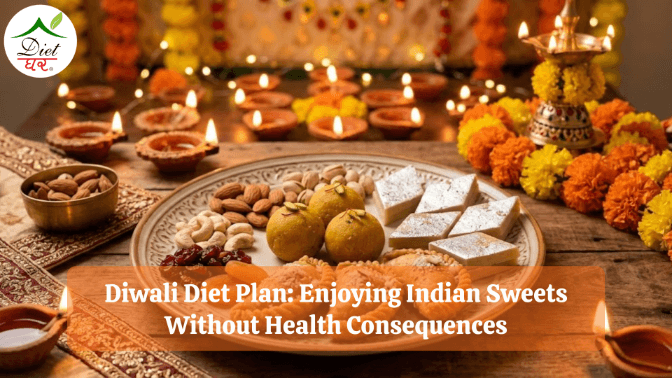
Diwali Diet Plan: Enjoying Indian Sweets Without Health Consequences
The Festival of Lights and the Festival of Sweets
Diwali is India's most celebrated festival, and its most nutritionally challenging one. Mithai boxes arrive from relatives, colleagues, and neighbours. Every household makes traditional sweets. Social gatherings involve continuous eating. And the foods, ladoo, barfi, kaju katli, gulab jamun, khoya-based mithai, are some of the most calorie-dense, sugar-rich foods in the Indian culinary tradition.
The average Indian gains 1–3 kg during the Diwali-to-New Year period. For people managing diabetes, PCOS, or cardiovascular risk factors, the festival period is genuinely challenging. For everyone else, it is at least a time when health goals get temporarily (and sometimes permanently) derailed.
This guide is not about skipping Diwali sweets. Indian festivals are cultural celebrations that happen once a year, and food is their soul. It is about eating the sweets you genuinely love, in amounts that are celebratory rather than destructive, while using the surrounding days to compensate and maintain.
Understanding What Makes Mithai So Impactful
Traditional Indian mithai hits the body in a very specific way: high sugar, high fat (often ghee or khoya), and low protein and fibre. This combination causes rapid blood sugar elevation, followed by a significant insulin response, followed by a blood sugar crash that triggers hunger again, often within an hour or two. The cycle then repeats.
This is why most people do not eat one ladoo and feel satisfied. The absence of protein and fibre means the satiety signal is never properly triggered, and the blood sugar rollercoaster keeps you reaching for more.
Understanding this is not to demonise mithai. It is to understand the mechanism so you can make smarter choices about timing and pairing.
Smart Mithai Strategies
Have Sweets After a Protein-Rich Meal, Not on an Empty Stomach
The glycaemic impact of mithai is dramatically different depending on what was eaten before. Having a ladoo as dessert after a meal that contained dal, sabzi, and roti results in a much smaller blood sugar spike than having the same ladoo on an empty stomach at 11am. This is because the protein, fat, and fibre from the meal slow gastric emptying and moderate the absorption of the sweet's sugars.
Practical implication: enjoy sweets after meals, not as standalone snacks. One barfi after lunch is nutritionally very different from one barfi mid-morning on an empty stomach.
Choose Quality Over Quantity
Many people eat multiple pieces of average-quality mithai at gatherings, picked up mechanically without much enjoyment. A more satisfying and less damaging approach: identify the one or two sweets you genuinely love the most and savour those deliberately. Pass on the others without guilt. One piece of excellent kaju katli eaten mindfully is more satisfying than three pieces of mixed mithai eaten while talking.
Homemade Is Almost Always Better
Commercial mithai often contains hydrogenated vegetable fat (vanaspati) instead of ghee, artificial colours, excess sugar, and preservatives. Homemade mithai made with genuine ingredients, besan, ghee, jaggery, nuts, is nutritionally superior and often more flavourful. If you make your own sweets, you control the ingredients and quantities.
The Jaggery Substitution
Many traditional Indian mithai recipes work perfectly with jaggery (gud) instead of refined white sugar. Jaggery has a lower glycaemic index than refined sugar, retains trace minerals (iron, calcium, potassium), and has a more complex, less sweet flavour that many people prefer. Besan ladoo, til laddoo, and peanut chikki made with jaggery are excellent alternatives that feel festive without the refined sugar load.
Healthier Diwali Sweet Alternatives
Several traditional Indian sweets are inherently more nutritious than others:
Better Choices
- Til laddoo (sesame seed balls): Sesame is rich in calcium, zinc, and healthy fats. Til laddoo made with jaggery is one of the most nutritious traditional Indian sweets.
- Makhana kheer: Fox nut kheer is lower in calories and glycaemic index than traditional rice kheer. Makhana itself is low in fat and has some protein.
- Dry fruit barfi: Barfi made primarily from dates, figs, and nuts without added sugar, is high in natural fibre and healthy fat.
- Besan ladoo: Besan (chickpea flour) provides protein and fibre that most mithai lacks. Besan ladoo with jaggery is relatively nutritious as Indian sweets go.
- Peanut chikki: The combination of peanuts (protein) and jaggery (complex sweetener) makes peanut chikki a satisfying, protein-contributing sweet.
Limit These
- Gulab jamun: Deep-fried and soaked in sugar syrup, extremely high in both fat and sugar, very high glycaemic impact
- Jalebi: Deep-fried refined flour with sugar syrup, low in nutrients, very high glycaemic impact
- Commercial khoya barfi: Often made with adulterated khoya and excess sugar, nutritionally questionable and calorically dense
Managing the Mithai Box Overload
One of the unique challenges of Diwali is the gift-driven overabundance of mithai. A household may receive 5–10 mithai boxes over the festive period. Having this quantity of high-sugar food in the house creates the environment problem. It is always available, always visible, always accessible.
Strategies:
- Give away most received mithai boxes to people who might enjoy them more, staff at home, colleagues, charitable organisations
- Set a "mithai allocation" for example, one piece per day for the duration of the festival, and stick to it by not keeping excess in the house
- Store mithai out of plain sight. The "if you see it you'll eat it" principle is very real. Kept at eye level in a bowl, mithai disappears faster than kept in a closed container at the back of a shelf
Diwali Eating: The Full Day Context
What you eat the rest of the day matters as much as the sweets themselves. A Diwali day eating strategy:
Breakfast
High protein start: eggs, or moong dal chilla with curd. This moderates your appetite through the morning and makes the afternoon and evening sweets less impactful on your blood sugar.
Lunch
Normal, nutritious meal, dal, sabzi, roti, curd. Do not skip lunch to "save room" for mithai, this backfires by arriving at the evening celebration hungry and making poor choices.
Afternoon
This is when mithai often appears. Having already eaten a nutritious lunch, enjoy one or two pieces of your favourite sweets after lunch or as part of the afternoon gathering.
Diwali Dinner
Keep dinner relatively moderate, festive but balanced. If you have had mithai during the day, have a lighter dinner that emphasises protein and vegetables. Puri-sabzi and kheer at dinner on top of a day of mithai is the combination that causes the most caloric accumulation.
For Diabetics
Monitor blood glucose more frequently during Diwali. Sugarfree mithai options are increasingly available, but they are not always the answer, sorbitol and other sugar alcohols in sugarfree sweets cause their own digestive issues in large amounts. Enjoy small amounts of real mithai after meals rather than larger amounts of "sugarfree" alternatives throughout the day. Always discuss Diwali management with your diabetologist in advance.
Get Your Personalized Diet Plan Today!
This article provides general information about nutrition and diet planning. Download the DietGhar app for a customized Indian diet plan tailored to your body type, health goals, and food preferences — with daily tracking and expert support.
About the Author
Written by the DietGhar dietitian team, helping clients since 2016 with personalised Indian diet plans. How our dietitians work
Find a Dietitian Near You
Get personalized nutrition plans from certified dietitians in your city. Online consultations available across India.

