Smart Snacking for Diabetics: 15 Indian Options That Don't Spike Sugar
One of the most immediately practical questions for newly diagnosed diabetics is: "What can I eat between meals?" Main meals can be planned carefully, but the in-between hours — mid-morning, late afternoon, late evening — bring hunger that the "no snacking" advice does not address practically. And the snack options available in most Indian kitchens and offices — biscuits, namkeen, chakli, samosas, fruit juice, sweetened chai — are almost uniformly bad for blood sugar.
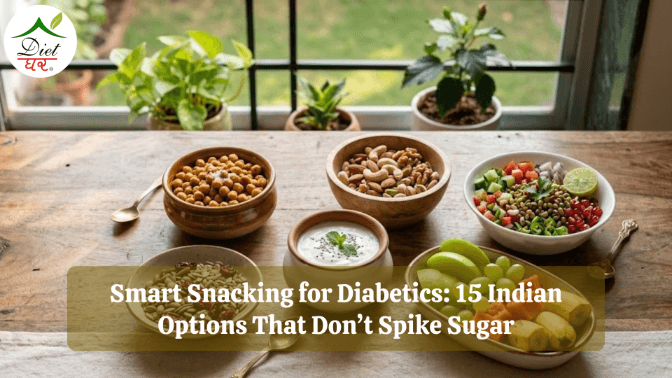
The good news is that there are excellent snack options that are Indian, accessible, affordable, and genuinely blood-sugar-safe. Here are fifteen of them, with the explanation of why each one works and how to prepare or access them easily.
Why Snacking Strategy Matters in Diabetes
Blood glucose management in diabetes is essentially the management of glucose spikes and troughs throughout the day. The goal is to avoid:
- Sharp glucose peaks (post-snack blood glucose above 140 mg/dL) that cause glycation, oxidative stress, and cardiovascular damage
- Glucose troughs (below 70 mg/dL) that can cause hypoglycaemia, particularly in patients on insulin or sulphonylureas
The right snack at the right time:
- Maintains blood glucose in the 90–140 mg/dL range between meals
- Prevents the severe hunger that leads to overeating at the next meal
- Provides nutrition (protein, fibre, micronutrients) rather than empty glucose spikes
The characteristics of a good diabetic snack: low glycaemic index, high fibre, adequate protein, minimal added sugar and refined carbohydrates, moderate portion size (100–200 calories maximum for most between-meal snacks).
The 15 Best Indian Diabetic Snacks
1. Roasted Chana (Whole Bengal Gram)
Why it works: Whole roasted chana has a glycaemic index of 28 — remarkably low. High in protein (21g per 100g), high in fibre, and extremely satiating. It is crunchy, flavourful, and portable. One small handful (30g) provides protein and fibre with minimal blood glucose impact.
Blood glucose impact: Post-snack spike: minimal. 30g serving raises glucose by approximately 15–20 mg/dL typically.
Availability: Widely available at any kirana shop, very inexpensive.
2. A Handful of Mixed Nuts (Almonds, Walnuts, Cashews)
Why it works: Nuts are low in carbohydrates and high in protein, healthy fats, and fibre. The glycaemic response is minimal. Nuts also improve insulin sensitivity over time with regular consumption. Magnesium in almonds specifically supports glucose metabolism.
Portion: 15–20 almonds or 6–8 walnuts or a mixed handful of 25–30g total. Avoid salted commercial mixed nuts with added coating or sugar.
Important note: Cashews have slightly higher carbohydrate content than almonds or walnuts — keep to 8–10 maximum.
3. Plain Curd (Dahi) Without Sugar
Why it works: Plain curd has a glycaemic index of approximately 35 — low. High in protein (4–5g per 100g), contains probiotics that improve gut health and insulin sensitivity over time. The lactic acid in curd may also slow carbohydrate digestion.
How to eat: Plain, with a pinch of roasted cumin powder, or with a small amount of fresh fruit (avoiding mango, banana, grapes). Avoid sweetened commercial curd — check labels for added sugar.
4. Moong Dal Sprout Chaat
Why it works: Sprouted moong has dramatically lower glycaemic impact than cooked unsprouted moong dal — sprouting breaks down starch and reduces glycaemic index significantly. High in protein and folate. Add lemon juice, chopped onion, tomato, coriander, and a pinch of chaat masala for a flavourful, filling snack.
Blood glucose impact: Very low — typically under 20 mg/dL rise for a 100g serving.
5. Cucumber and Carrot Sticks With Peanut Chutney
Why it works: Cucumber and carrot have very low GI (15–30). Peanut chutney adds protein and fat that further slow any glucose absorption. The crunchy texture addresses the textural craving that leads many people to namkeen.
Simple recipe: Blend 2 tablespoons peanuts with coriander, green chilli, lemon, and salt. Use as dip for vegetables.
6. Boiled Egg (or Egg White)
Why it works: Eggs have essentially zero glycaemic response. One to two hard-boiled eggs provide complete protein (6g per egg), vitamin D, B12, and choline without any blood sugar impact. They are portable, prepare in advance easily, and are affordable.
For pure cholesterol-watchers: Egg whites only have zero fat and approximately 3–4g protein per white. Two to three egg whites are an excellent zero-GI snack.
7. Makhana (Lotus Seeds, Dry Roasted)
Why it works: Makhana (fox nuts) have a lower GI than most grains and puffed snacks. They are high in magnesium and protein relative to calories, and are very low in fat. A cup of dry-roasted makhana with a pinch of pink salt and cumin provides approximately 100 calories with moderate glycaemic impact.
How to prepare: Dry roast in a kadai over low heat for 8–10 minutes, tossing frequently, until crispy. Add minimal salt and spice after roasting. No oil needed.
Portion: One cup (approximately 30g). Avoid commercial makhana coated in sugar, caramel, or heavy masala.
8. Paneer Cubes With Chaat Masala
Why it works: Paneer is essentially zero carbohydrate (1.2g per 100g). The protein and fat content produces no significant blood glucose response. A 50g portion of paneer provides 9g protein and keeps blood sugar stable while satisfying hunger.
How to serve: Cut into small cubes, sprinkle chaat masala, squeeze lemon, add chopped coriander. Can be made in 2 minutes.
9. Chaas (Thin Buttermilk) With Roasted Cumin
Why it works: A glass of plain chaas (without sugar) provides protein, probiotics, and hydration with minimal caloric or glycaemic impact. The roasted cumin (jeera) improves digestion. It is filling as a liquid snack and addresses the desire for a warm or cool beverage.
Caution: Do not add sugar. A pinch of rock salt and roasted cumin powder is the correct preparation.
10. Peanut Butter on One Piece of Multigrain Toast
Why it works: Natural peanut butter (without added sugar or hydrogenated fat) is low GI and high in protein and fat. One piece of multigrain bread with one tablespoon of peanut butter has a lower glycaemic response than bread alone and provides sustained satiety.
Check the peanut butter label: Ingredients should be just peanuts and salt — no added sugar, palm oil, or modified starch.
11. Flaxseed Crackers or Seed Mix
Why it works: A tablespoon mixture of flaxseeds, pumpkin seeds, and sunflower seeds is essentially zero glycaemic impact, high in fibre, omega-3 fatty acids, and minerals. Two tablespoons of mixed seeds as a snack provides omega-3 ALA, zinc, magnesium, and selenium with minimal calories and zero blood glucose impact.
12. Amla (Indian Gooseberry)
Why it works: Fresh amla is remarkably low in sugar (5g per 100g) for its flavour intensity, and very high in vitamin C, chromium, and polyphenols that improve insulin sensitivity. Two to three fresh amlas as a snack are blood-sugar-safe and genuinely nutritious. Chromium in amla specifically improves insulin receptor sensitivity.
Dried or candied amla (murabba) has added sugar — choose fresh or plain dried amla.
13. Guava
Why it works: Guava has a glycaemic index of approximately 12–24 — among the lowest of any fruit. It is high in fibre, vitamin C, and potassium. One small guava as a snack provides 9g of carbohydrate with high fibre that significantly blunts glucose absorption.
Most diabetics can eat guava safely. It is one of the few fruits genuinely appropriate as a frequent diabetic snack.
14. Green Chutney Sandwich (With Protein Addition)
Why it works: A sandwich with green chutney (mint-coriander blend), cucumber slices, and a slice of paneer or boiled egg on multigrain bread provides carbohydrate in a controlled portion with protein and fat that reduce the glycaemic response significantly.
Key: Use 1 slice of bread (not 2), multigrain or whole wheat, and ensure a protein component is present. This keeps the glycaemic response to a single slice equivalent rather than doubling it.
15. Roasted Chickpeas (Dry Roasted Kabuli Chana)
Why it works: The baking or dry roasting process of whole chickpeas maintains their low GI (28–32) while creating a crunchy, satisfying texture. Available commercially or made at home: soak and boil chickpeas, dry thoroughly, roast at 200°C for 30 minutes with minimal oil, salt, and spice.
What to Avoid
For reference, the snacks that cause the largest post-snack glucose spikes in Indian context:
- Glucose biscuits (ironically named — pure high-GI sugar)
- Parle-G and similar biscuits (high GI, 30% sugar)
- Namkeen and chakli (high refined carbohydrate, high sodium)
- Fruit juice (even "healthy" — liquid fructose without fibre)
- Commercial banana chips (fried, sugared, high GI)
- Packaged health bars with fruit and honey (often 25–35g of sugar)
- Sweetened chai multiple times per day
For personalised diabetic meal planning including snack strategies, working with a registered dietitian experienced in diabetes management provides individualised guidance that general lists cannot offer.
Get Your Personalized Diet Plan Today!
This article provides general information about nutrition and diet planning. Download the DietGhar app for a customized Indian diet plan tailored to your body type, health goals, and food preferences — with daily tracking and expert support.
About the Author
Written by the DietGhar expert team — certified dietitians with 10+ years of experience helping clients achieve their health goals through personalized Indian diet plans.
Find a Dietitian Near You
Get personalized nutrition plans from certified dietitians in your city. Online consultations available across India.

