Staying Hydrated in Indian Summers: Electrolytes, Fluids and Food
Between March and June, much of India becomes one of the most challenging environments on earth for human hydration. Temperatures in Rajasthan, Gujarat, Madhya Pradesh, and the Deccan plateau regularly exceed 45°C, and humidity in coastal cities adds a sweat-suppressing heaviness that makes the heat feel even more oppressive. In this environment, dehydration is not an inconvenience. It is a genuine medical risk that kills hundreds of Indians every summer and chronically impairs the health and cognitive function of many more.
Most Indians do not drink enough water even in moderate weather. In summer, the gap between requirement and intake becomes dangerous. And the problem is compounded by a widespread misunderstanding: that thirst is a reliable hydration guide, and that plain water is always sufficient. Neither is true.
Why Thirst Is a Poor Hydration Guide
By the time you feel thirsty, you are already 1–2% dehydrated, a level that measurably impairs cognitive performance, exercise capacity, and mood. At 2% dehydration, concentration and short-term memory are affected. At 3–4%, physical performance declines significantly. At 5% and beyond, heat exhaustion and heat stroke risk increases dramatically.
Thirst sensitivity also declines with age, elderly Indians are at particular risk because they do not feel thirst appropriately even when significantly dehydrated. Many older Indians in summer months are chronically dehydrated and attribute the resulting fatigue, confusion, and kidney stress to other causes.
The practical rule: do not wait to feel thirsty. Drink on a schedule, regardless of thirst, throughout the day in summer months.
How Much to Drink
General target: 2.5–3.5 litres of total fluid per day (including fluid from food) in moderate summer heat. In extreme heat (above 40°C) or with significant physical activity: 3.5–5 litres.
Urine colour is a simple, reliable hydration guide: pale yellow indicates good hydration; dark yellow or amber indicates dehydration; clear may indicate over-hydration (which has its own risks from electrolyte dilution).
Why Plain Water Is Sometimes Insufficient
Sweat is not just water. It contains sodium, potassium, chloride, and smaller amounts of magnesium and calcium. In heavy sweating conditions (manual labour, outdoor exercise, farm work, construction, long commutes on foot), replacing fluid volume with only plain water dilutes the sodium remaining in the blood. This can cause hyponatraemia (low blood sodium), symptoms include nausea, headache, confusion, and in severe cases, seizures and death.
This is why water alone is insufficient for people who sweat heavily and continuously. Electrolyte replacement, particularly sodium and potassium, must accompany fluid intake in these conditions. The traditional Indian culinary culture has very practical solutions for this, several of which are more effective than expensive commercial "sports drinks."
The Best Traditional Indian Hydration Solutions
Nimbu Paani (Lemon Water With Salt and Sugar)
The humble nimbu paani is essentially a homemade oral rehydration solution. The combination of water, sodium (salt), potassium (from lemon juice), glucose (sugar or jaggery), and citrate provides fluid, electrolytes, and a simple carbohydrate that enhances sodium absorption through the SGLT1 transporter in the intestinal wall. The same mechanism used by WHO-standard ORS.
Optimal recipe: 500 ml water + juice of half lemon + quarter teaspoon salt + one teaspoon jaggery or sugar. This provides adequate sodium and potassium for moderate heat without excessive sugar. Have one to two glasses during peak afternoon hours.
Aam Panna
Raw mango drink (aam panna) is one of India's most nutritionally sophisticated traditional summer drinks. Made by boiling or roasting green raw mango and mixing the pulp with water, spices (cumin, black salt, mint), and a small amount of sugar, aam panna provides: vitamin C from raw mango (significantly higher than ripe mango), potassium, organic acids (citric and malic) that reduce fatigue, electrolytes from salt, and cooling compounds from mint. It is genuinely one of the best heat-stroke prevention drinks in the Indian culinary tradition.
Coconut Water
Fresh coconut water is isotonic (has a similar electrolyte concentration to blood plasma) and is the most complete natural electrolyte drink available. One medium coconut provides approximately 600 mg of potassium, 250 mg of sodium, 60 mg of magnesium, and natural sugars, a remarkably complete electrolyte profile. For moderate hydration needs, fresh coconut water from street vendors (a deeply Indian summer practice) is scientifically excellent. Packaged coconut water often contains added sodium, check labels if monitoring sodium intake.
Chaas (Spiced Buttermilk)
Thin chaas (diluted curd with water, salt, and spices) is a superb summer hydration drink. It provides: fluid, sodium from salt, potassium from curd, protein (4–6g per glass), probiotics for gut health, and the cooling effect of curd's fermentation acids. A glass of chaas mid-afternoon is both hydrating and nutritionally complete in ways no commercial sports drink matches. The standard spicing, cumin powder, rock salt, mint, coriander, adds carminative benefits that prevent heat-season digestive problems.
Sattu Drink
Roasted gram (sattu) dissolved in water with salt, lemon, and spices is one of the most nutritionally dense summer drinks in North India, particularly popular in Bihar, Uttar Pradesh, and Rajasthan. Sattu provides: protein (25% by weight), complex carbohydrate for sustained energy, minerals including potassium and magnesium, and the cooling property that traditional wisdom assigns to roasted gram. A 50g serving in 500 ml of water provides approximately 12g of protein, making sattu drink the most protein-complete Indian summer beverage.
Jaljeera
Water with cumin, tamarind, black salt, mint, and spices, jaljeera is a digestive drink that also serves as a flavoured electrolyte water. The sodium from black salt (which also contains trace minerals) and potassium from tamarind make jaljeera a culturally familiar electrolyte solution that encourages drinking beyond what plain water would motivate.
Kanji
Fermented black carrot or raw mango drink from North India, particularly consumed in the days around Holi. Kanji provides: natural probiotics from fermentation, electrolytes, and a refreshingly sour flavour that encourages drinking. The fermented nature makes it digestively beneficial in the season when gastrointestinal infections (from waterborne pathogens, which proliferate in heat) are a risk.
Hydrating Foods
Approximately 20% of daily fluid intake typically comes from food. Indian summer foods naturally include many high-water-content options:
- Cucumber (kheera), 96% water. Eat sliced with lemon and salt as a daily summer snack. Also cooling in the Ayurvedic sense, with real hydration value.
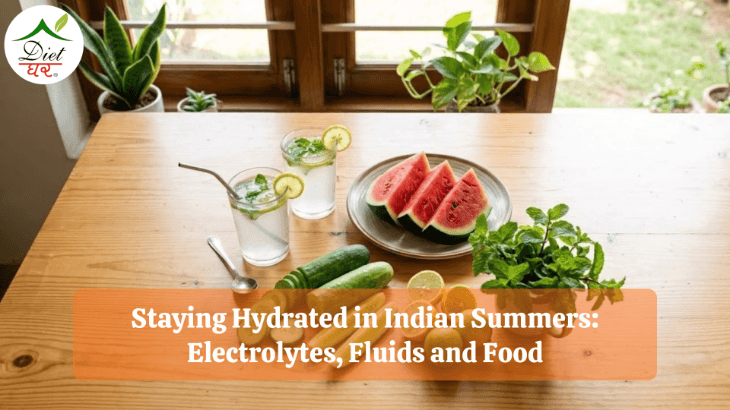
- Watermelon (tarbuz), 92% water plus lycopene (antioxidant), potassium, and vitamins. The Indian summer tradition of street-side watermelon is nutritionally excellent hydration.
- Curd (dahi), 85% water plus protein, electrolytes, and probiotics. Raita, curd rice, and plain curd are all hydrating and nutritionally complementary summer foods.
- Bottle gourd (lauki), 96% water. Traditional Indian summer sabzi made with lauki is genuinely a hydrating food. Lauki ki sabzi, lauki raita, lauki juice (in moderation, excessive raw lauki juice has rarely caused toxicity from naturally occurring cucurbitacins).
- Mosambi and orange juice, fresh-squeezed at home, not packaged. Provides vitamin C, potassium, and fluid with moderate sugar.
- Mango (ripe), high in water, potassium, and vitamins. One medium mango daily is an excellent summer hydration contribution (note: moderation for people managing blood sugar).
Heat Exhaustion and Heat Stroke: When Nutrition Is Not Enough
Heat exhaustion: heavy sweating, weakness, cold pale skin, fast weak pulse, nausea, fainting. Management: move to shade or cool area immediately, drink ORS or electrolyte solution (not just plain water), apply cool wet cloths to skin.
Heat stroke: body temperature above 40°C, hot dry skin (sweating has stopped), rapid strong pulse, confusion, possible unconsciousness. This is a medical emergency. Call for help immediately, cool the person by any means available (wet cloths, ice packs to neck/armpit/groin), and transfer to hospital without delay.
Prevention: drink electrolyte-containing fluids before and during heat exposure, not just after feeling thirsty. Cover the head outdoors. Avoid peak sun exposure (11 AM–4 PM) when possible. Wear light-coloured, loose, breathable cotton clothing. Eat light meals during the hottest parts of the day, heavy digestion generates additional internal heat.
For workers in outdoor heat (construction, agriculture, NREGA labourers), adequate hydration with electrolytes is not optional. It is occupational health and safety. The traditional Indian work practice of carrying ORS packets, sattu, or aam panna to outdoor work sites is practical wisdom worth preserving and extending.
Sources
- Dietary Guidelines for Indians 2024, ICMR National Institute of Nutrition (NIN), Hyderabad
- Indian Food Composition Tables (IFCT) 2017, ICMR National Institute of Nutrition (NIN), Hyderabad
- Healthy diet (fact sheet), World Health Organization
Get Your Personalized Diet Plan Today!
This article provides general information about nutrition and diet planning. Download the DietGhar app for a customized Indian diet plan tailored to your body type, health goals, and food preferences: with daily tracking and expert support.
About the Author
Written by The DietGhar Team nutritionists, helping clients since 2016 with personalised Indian diet plans. How our nutritionists work
Popular guides
Diet plans
Articles
- PCOD diet chart, 7-day Indian meal plan
- Insulin resistance diet for Indians
- PCOS acne and skin: diet changes
- Indian keto diet for beginners
- Stress eating and cortisol
- Gluten-free Indian food for celiac disease
- Nutrition for Indians over 60
- South Indian diet for weight loss
- North Indian diet makeover
- Breastfeeding diet chart
- Winter diet and immunity foods
- Best Indian foods for hair growth
- Why crash diets fail
Find a Dietitian Near You
Get personalized nutrition plans from qualified nutritionists in your city. Online consultations available across India.

