
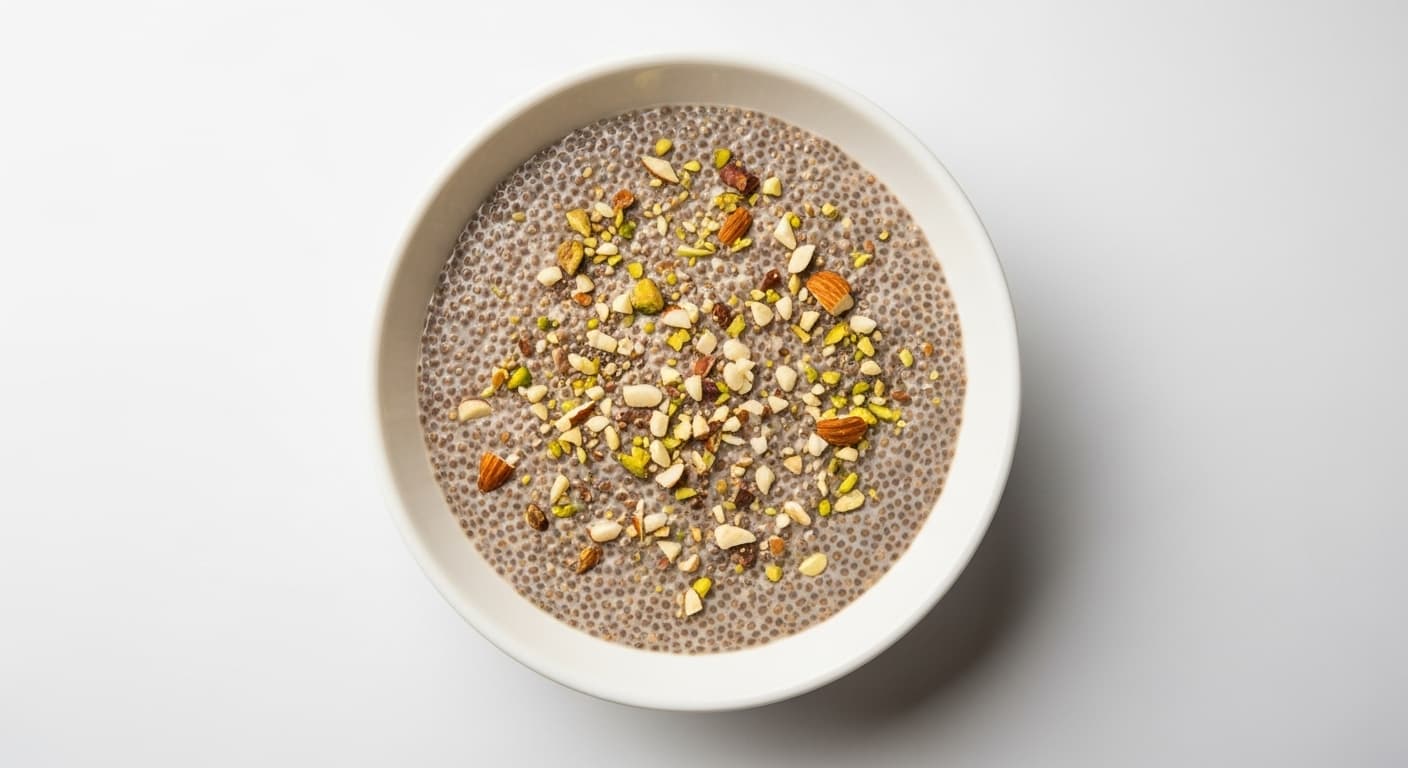
Indian Chia Pudding with Mango: An Omega-3 Rich Modern Indian Breakfast
A wholesome Indian recipe crafted for health-conscious eating: nutritious, delicious, and easy to make at home.
Chia seeds have become a global nutritional phenomenon, and genuinely so. One tablespoon provides 2g ALA omega-3, 3g fibre, 90mg calcium, and significant magnesium and zinc. But most chia pudding recipes feel foreign to Indian palates, Western flavours, no familiar spice notes, nothing that feels like home. This version uses cardamom, mango, and saffron to create a distinctly Indian flavour profile that feels like a traditional dessert while delivering exceptional modern nutrition.
The overnight preparation is one of chia pudding's greatest virtues: zero morning effort, and you wake up to a breakfast that keeps you full for 4 to 5 hours because of the combination of protein, fat, and mucilaginous fibre. Mango adds natural sweetness (reducing added sugar), Vitamin C, and beta-carotene. Cardamom and saffron create the aroma that makes this feel genuinely Indian. Global superfood nutrition, Indian culinary tradition, they meet elegantly here.
Ingredients
How to Make It
The night before: Add chia seeds to a jar or bowl. Add milk, cardamom, saffron milk, honey, and rose water. Stir vigorously for 1 full minute, this prevents clumping.
Let sit for 5 minutes, then stir again. This second stir is important, it distributes the chia seeds evenly before they gel fully.
Cover and refrigerate overnight (6 to 8 hours minimum).
In the morning, the chia seeds will have absorbed all the milk and the mixture will be thick like a pudding.
Stir well. The consistency should be thick, creamy, and slightly jelly-like from the chia mucilage.
Serve in two glasses or bowls. Top with mango: either as a puree layered below or as diced pieces on top.
Garnish with chopped pistachios and rose petals or pomegranate arils.
Eat cold from the fridge, or let it come to room temperature for 5 to 10 minutes.
Nutrition per serving
* Approximate values per serving
Health Benefits
Each serving of this chia pudding provides 4g ALA omega-3, significantly exceeding the adequate intake for anti-inflammatory benefit. Chia's mucilaginous fibre (10g per serving) is one of the most powerful gel-forming fibres known. It creates an extraordinarily thick food matrix in the gut that slows glucose absorption, increases satiety hormones (GLP-1, PYY), and feeds beneficial gut bacteria. Chia provides 180mg calcium per serving, comparable to half a glass of milk, from a plant source that people with lactose intolerance often tolerate well. Mango brings beta-carotene (Vitamin A precursor) and Vitamin C, complementing the fat in chia seeds for optimal fat-soluble vitamin absorption. Saffron contains crocin and crocetin, carotenoid antioxidants with anti-inflammatory and antidepressant properties supported by clinical evidence.
Pro Tips
- →The two-stir technique (stir once, wait 5 minutes, stir again) is the single most important tip for lump-free chia pudding. If you stir only once, the seeds clump together and you end up with jelly balls in liquid rather than a uniform pudding.
- →Ratio matters: 2 tbsp chia per ¾ cup milk per serving. More chia gives a stiffer pudding; less chia gives a runnier one. Adjust to your preference.
- →Fresh, ripe mango in season is transformative, Alphonso or Kesar mango pureed over chia pudding is genuinely extraordinary. Out of season, frozen mango works well.
- →If you're making this during mango season for a special occasion, don't skip the saffron. The combination of saffron, cardamom, and Alphonso mango is essentially Indian royalty in a glass.
Variations
- 1Coconut milk chia pudding: Replace dairy milk with coconut milk for a creamier, more indulgent version with additional MCTs, the flavour with mango is exceptional.
- 2Mixed berry version: Replace mango with ½ cup mixed berries for a different antioxidant profile, especially good for gut microbiome diversity.
- 3Chocolate Indian chia pudding: Add 1 tbsp cacao powder and ¼ tsp cardamom, chocolate and cardamom together is quintessentially Indian chai-inspired.
Frequently Asked Questions
You Might Also Like
Get a Personalised Diet Plan
4.9★ on Google • 7,000+ clients helped

